Drift Field
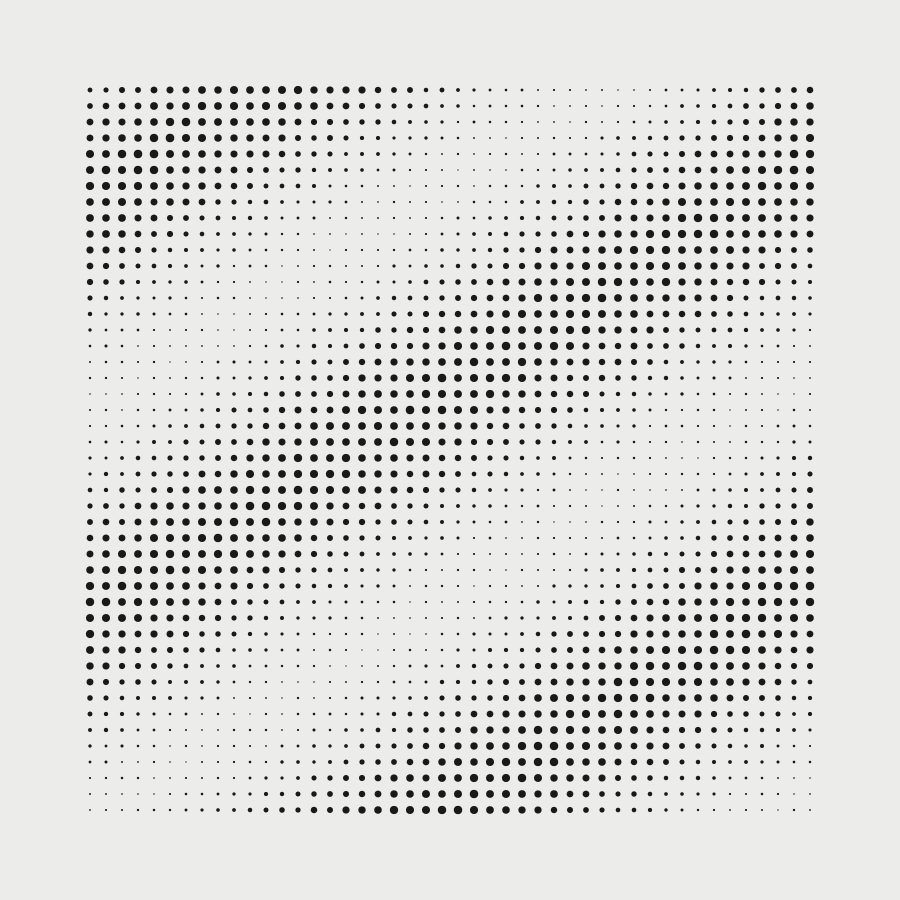
Two thousand dots, one slow wave. A study in how little it takes to suggest weather.
About the piece
Drift Field began as a pencil exercise: rows of dots, each one pressed a fraction harder than the last. I wanted to see whether density alone could carry a sense of movement — no lines, no colour, just weight.
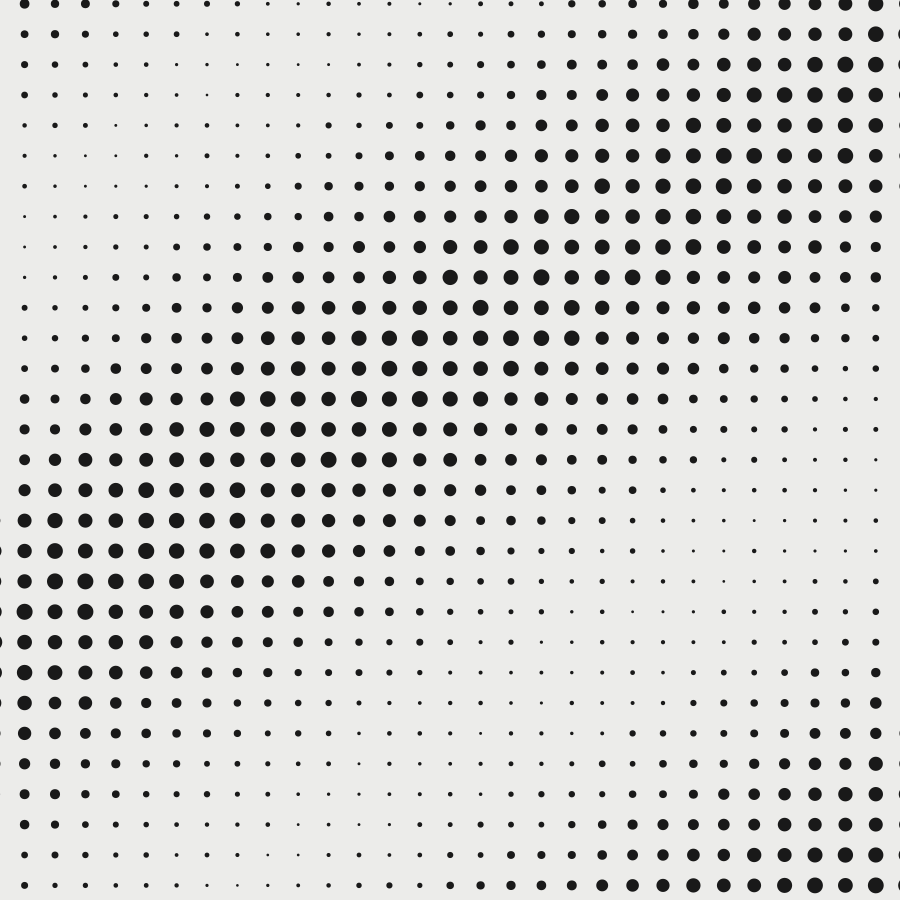
The coded version runs a slow diagonal sine across a 46-by-46 grid. Where the wave crests, the dots swell to four times their resting size; where it troughs, they nearly vanish. The result reads like wind over grass, or rain deciding where to fall.
Details
Each print is generated from a fixed seed, then plotted with archival pigment ink on 310gsm cotton rag. The paper’s warmth is part of the piece — the ground you see here is the sheet itself, not ink.
Every edition is numbered, embossed and signed. Proofs from the tuning phase — paler, wilder, off-register — occasionally surface in the studio sale.
Pencil grid
Forty-six rows dotted by hand to find the rhythm the code would later follow.
Wave tuning
Dozens of renders adjusting frequency and falloff until the swell felt like weather.
Plot & proof
Plotted in archival ink, proofed under daylight, editioned in batches of ten.
“The Field print anchors our reading room. Guests always walk up to it — it looks calm from far away and restless up close.” — Mara Ellingsen, collector, Bergen
Related projects

Like this direction?
Drift Field is available as a print, and the system behind it can be tuned for commissions.